Is Cyprus a good base for a SaaS company in 2026?
- Subject
- Cyprus for SaaS
- As at
- 1 January 2026
- Checked
- to the sources in the key
Short answer
Cyprus can suit a SaaS company that owns and develops its software. Corporate tax is 15% from 2026a, copyrighted software qualifies for the IP box's 80% deductionbc, which works out at 3% on fully qualifying profit (our arithmetic), and a non-dom founder pays 0% SDC on dividends, with GHS of 2.65% up to EUR 180,000de.
- a Corporate income tax from 1 January 2026
was 12.5%15% - c IP box, qualifying profit, full nexus 15% x 20%, our arithmetic
was 2.5%3% - d SDC on dividends, non-dom founder GHS 2.65% still applies, up to EUR 180,000 0%
- f Registrar fee to incorporate company with share capital EUR 165
- g VAT registration threshold taxable supplies, past 12 months EUR 15,600
- Published
- Updated
- Figures as at
The short answer on camera
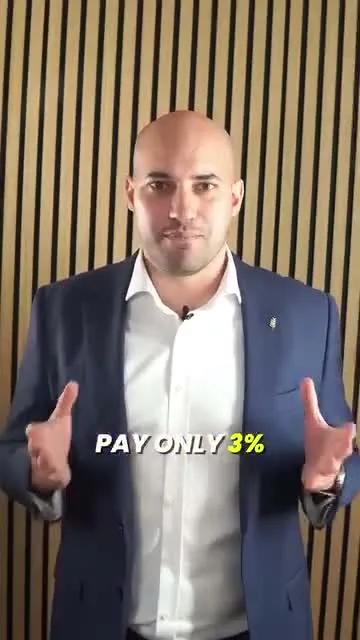
2026 note 3% is 15% tax on the 20% of qualifying IP profit left after the 80% deduction, at a full nexus fraction. For an AI product the qualifying asset is the code. Dividends: 0% SDC for non-dom residents, and GHS of 2.65% still applies.
Why do SaaS founders look at Cyprus?
Three rules line up for a software business. The company pays 15% corporate income tax from 2026ah. Profit from software the company owns can get an 80% deduction under the IP boxcb. And a founder who moves to Cyprus as a non-dom pays 0% Special Defence Contribution on dividends, with GHS of 2.65% on up to EUR 180,000 of incomede.
None of the three works on its own. The IP box needs real development and ownership. The dividend treatment needs you to be tax resident and not domiciled in Cyprus. And everything sits inside the 2026 rules, which changed several figures that older pages still quote. If those conditions sound like your business, check whether Cyprus fits your SaaS in six short questions.
What does the IP box do for a SaaS company?
The company deducts 80% of its net qualifying IP profit, calculated under the nexus approachc. Copyrighted software is listed as qualifying IP, and ownership can be legal or economicb.
With the corporate rate at 15%a, that leaves 20% of qualifying profit taxed at 15%: 3% of that profit. This is our arithmetic, not a statutory rate. Until 31 December 2025 the same arithmetic gave 2.5%, because the rate was 12.5%h. Many videos and pages still say 2.5%.
| Profit route | Rate on that profit |
|---|---|
| Standard corporate tax | 15%a |
| IP box, qualifying profit, full nexus fraction | 3% (15% x 20%, our arithmetic)ca |
| IP box before 2026, same assumptions | 2.5% (12.5% x 20%)hc |
For SaaS the important line in the rules is that qualifying profit includes “IP income embedded in the sale of products, services, or the use of processes directly related with qualifying IP assets”b. Subscription revenue can fall under that, but only the part attributable to the software. Customer support, implementation work and brand value are not software IP. Trademarks are excluded outrightb.
The deduction is scaled by a nexus fraction that rises with R&D done by the company itself, through a taxable foreign branch, or by unrelated outsourced developersb. If most of your code was written by a related company or bought in, expect less than 3%. The details are in whether your SaaS qualifies.
What does it cost to set up the company?
The Registrar of Companies charges EUR 165 to incorporate a company with share capital, plus EUR 100 if you want accelerated registrationf. Name approval costs EUR 10 per proposed name, plus EUR 20 per name to acceleratei. The annual company levy was abolished from 2024j.
Those are government fees. Service fees for formation, accounting and audit are separate and are not on this page. The full breakdown is in Cyprus company formation costs.
How is the founder taxed?
That depends on residency and domicile, not on the company. A Cyprus tax resident who is not domiciled in Cyprus pays 0% SDC on dividendsd and no income tax on themk, with GHS at 2.65% on up to EUR 180,000 of total incomee. A domiciled resident pays 5% SDC on dividends from profits earned from 2026c.
Illustration. EUR 1,000,000 of qualifying IP profit at a full nexus fraction, distributed to a non-dom founder. The company deducts EUR 800,000c and pays 15% on EUR 200,000, which is EUR 30,000a. If it distributes the remaining EUR 970,000, GHS applies only to the first EUR 180,000 of the founder’s income, so GHS is at most EUR 4,770e. Total: about EUR 34,770, or 3.5% of the profit. That is our arithmetic, and it assumes the founder has no other income using up the GHS limit.
The dividend detail is in Cyprus dividends for non-doms.
What about VAT on subscriptions?
The company must register for VAT once its taxable supplies pass EUR 15,600 over the preceding 12 months, or will within the next 30 daysg. Registration starts with the tax registry on Tax For Allg.
For consumer subscriptions sold across the EU, an EU-wide threshold of EUR 10,000 a year applies to cross-border electronic services and distance sales combinedl. Above it, VAT is due in the customer’s country, declared through the One Stop Shopl. The steps are in Cyprus VAT registration.
When is Cyprus not a good fit for a SaaS company?
Three cases come up often. A company that does not own its code, for example because a related company abroad owns it, has no qualifying IP of its ownb. A business whose profit is mostly services or brand gets little from the IP box and pays 15%a. And a founder who will not live in Cyprus does not get the non-dom dividend treatment, because SDC rules apply to Cyprus tax residentsd; their home country taxes the dividend instead.
This page does not cover moving existing IP into Cyprus, transfer pricing, or the nexus formula itself.
What to do next
List who owns your code today, where the developers sit, and where you will live. Those three facts decide most of the answer. Then answer six short questions to check your fit.
Who this page is not for
Agencies, consultants and resellers whose profit does not come from software they own; their profit is taxed at the standard 15%.
Questions founders ask next
Does SaaS subscription revenue qualify for the IP box?
It can. Qualifying profits include IP income embedded in the sale of products or services directly related to qualifying IPb, and copyrighted software is qualifying IPb. Only the part of the profit that comes from the software qualifies, and a nexus fraction based on your own R&D scales itb. Support, consulting and brand value do not qualify.
Is the IP box rate really 3%?
3% is arithmetic, not a statutory rate. The company deducts 80% of qualifying IP profitc, so 20% is taxed at 15%a, which is 3% of that profit. It only holds when all of the profit qualifies and the nexus fraction is full. A lower fraction or non-qualifying income raises the blended rate.
Do trademarks or my brand qualify?
No. Marketing-related IP, such as trademarks, is excluded from the Cyprus IP boxb. Profit that comes from your brand rather than your software is taxed at the standard 15%a. In practice that means a SaaS company has to show which part of its profit comes from the code, and which from the brand and service around it.
Do I have to register the software copyright?
The sources we rely on list copyrighted software as qualifying IP and accept legal or economic ownershipb. They do not set out a registration requirement. What matters in practice is evidence that the company owns or economically owns the code and did the development. This page does not give a legal view on copyright registration.
Do I need to charge VAT to EU customers?
Once the company is VAT registered, sales to consumers in other EU countries follow the EU rules for electronic services. Below EUR 10,000 a year of cross-border consumer sales, home-country VAT can apply; above it, the customer's country applies and OSS is the simple way to declare itl.
General information about Cyprus rules as published by the official sources linked on this page, on the dates shown. It is not tax, legal or immigration advice and does not consider your circumstances. Services are delivered by GMAP Associates Ltd, Larnaca.